EXERCISE 1: SYMMETRY ANALYSIS
Date: January 19, 2012
Due: Part 1: January 23, 2012 (in studio pinup only) and Part 2: January 31 (by the submission outlined below)
Overview:
The first exercise will explore symmetry through vector geometry and reacquaint you with computer aided design. A direct extension of the ARCH 602 studio, you are asked to apply this exercise to the abstract study of Le Corbusier’s La Tourette. Part 1 is due as a pinup in studio only on Monday, January 23rd. Responding to feedback and other insights gained, you are to refine your exploration of La Tourette for a submission of Part 2 on January 31st. The submission for Part 2 only should be to the class server and according to the instructions below under "How to Hand In Your Work".
The work can be produced in Rhino with or without Grasshopper. Optionally, begin with a digital photograph of an object and place it as an underlay in the CAD system.
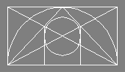
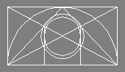
The objective is to capture symmetry not as a single static representation but to break it down into a sequence of five to ten steps. For example in the first Book on Geometry in Serlio's Book of Architecture, note especially the construction of the oculus as described on plate 22v. The oculus is constructed in eight steps as captioned below according to Serio's words.
Example of Oculus
"Very often the architect has to build an oculus on a temple -- whether big or small – and perhaps he will not be able to tell how large it should be but will make is according to his own judgment and according to how it pleases his eye. If, however, he wishes to make it according to geometric theory, he would never be criticized by anyone who understood such things." (1996, Hart and Hicks translation).
| "Therefore the architect should measure the width of the space where he is going to make the oculus, and encompassing that width he should draw a semi-circle. |

|
Then, having enclosed this with straight lines |
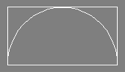
|
he should draw two diagonal lines |
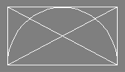
|
and then two other lines from the bottom corners to the top of the semicircle. |
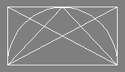
|
The places where the two upper diagonal lines intersect those which go to the top is where to make the points for dropping two plumb lines. |
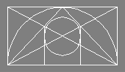
|
These will give the width of the oculus, as is shown in the figure opposite. |
|
As for its ornamentation, this should be a sixth part of the diameter of the oculus." |
|
How to Begin
In this exercise, it is assumed that your prior experience in the fall should provide the essential skills needed to do the work. However, we will be reviewing some of the basic techniques needed in the workshop. In addition, you are strongly encouraged to seek out individual tutorial assistance with the primary TAs in the course, Matt Godfrey and Charles Sparkman, or the course instructor, Earl Mark, for direct help in reviewing and if necessarily learning the essential tools needed. This first exercise should be used as a vehicle to benchmark where your understanding and ability lies so that a more specific set of tutorials can be developed around your needs. In this respect, you shouldn’t hesitate to request as much time as needed to help facilitate you learning and developing confidence in your understanding of the tools.
What to Hand In
Compose your drawing as a series of layers in the CAD system, one for each step in your sequence. Optionally, include a script file in Grasshopper or Generative Components with input parameters that determine the construction sequence.
How to Hand Your Work In
Within the ALAR 6712 classes folder on Olmsted, put all the final work in the folder: submit/yourname/exercise1. Email a short one paragraph description of your process to Earl Mark, ejmark@virginia.edu, Matthew Godfrey meg9j@virginia.edu, and Charles Sparkman cs3cj@virginia.edu .
What is to come:
In the weeks that follow, we will begin to take a similar strategy in developing three-dimensional descriptions. We will explore geometrical representation of land. We will also take a look at working between between vector graphics and raster graphics media.
References
Jones, Owen, The Grammar of Ornament, London: The Ivy Press Limited, 2001, originally published in 1856).
Hart and Hicks, Sebastiano Serlio on Architecture, Volume 1 Books I-V of "Tutte l`opere d`architettura et prospetiva", Yale University Press, 1996.
Rowe, Colin, The Mathematics of the Ideal Villa and Other Essays, MIT Press, 1992 (first published in 1947).
Serlio, Sebastiano, 1475-1554. The five books of architecture : an unabridged reprint of the English edition of 1611 / Sebastiano Serlio. Dover ed. New York : Dover Publications, 1982.
Thomson, D’Arcy.On Growth and Form, Cambridge University Press, 1992.
I